William Henry Devereaux, Jr.’s childhood
The Nomadic Childhood
Raised in university houses by two academic parents, [William Henry Devereaux, Jr.](entity:character-recall-character-william-henry-dever-058638eeafe1) grows up lonely, surrounded by his father’s literary gatherings and his mother’s work. More than anything, he wants a dog, and he learns that persistence can wear down even a determined refusal.
When William Henry Devereaux, Jr. is nine
The Bargain for a Dog
Hank’s Mother tells her son that a dog is something he must earn, hoping a list of conditions will end his campaign. He answers with relentless talk of dogs, library books, and finally an expensive collar and leash bought with his saved allowance.
Late summer in William Henry Devereaux, Jr.’s childhood
Red’s Arrival and Death
[William Henry Devereaux, Sr.](entity:character-recall-character-william-henry-dever-0cd5117c9d45) brings home an elderly Irish setter, not the lively puppy his son had imagined. The dog collapses and dies almost immediately; as his father buries her, Hank names her Red, a rare moment of shared experience between father and son.
When William Henry Devereaux, Jr. is in junior high school
His Father’s Departure
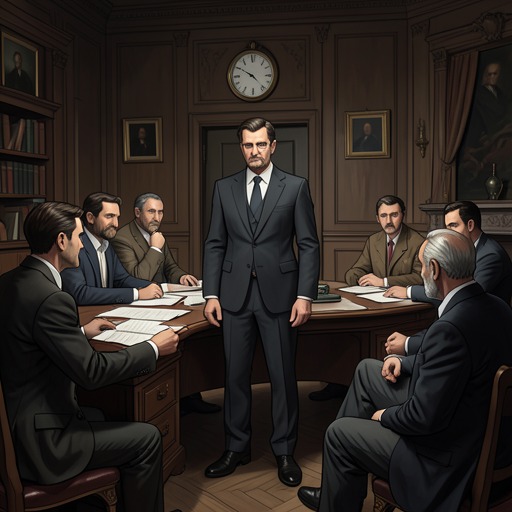
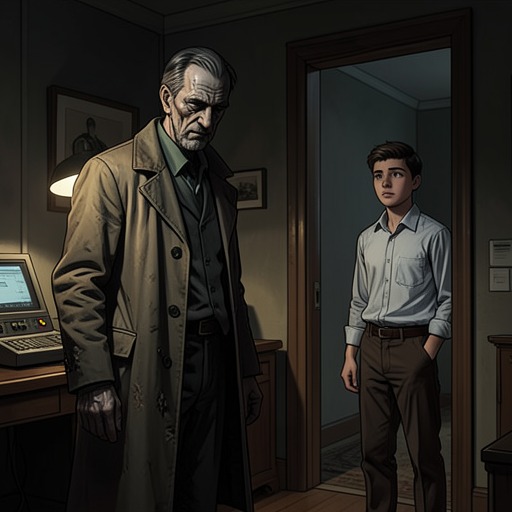
[William Henry Devereaux, Sr.](entity:character-recall-character-william-henry-dever-0cd5117c9d45) leaves Hank’s Mother for one of his graduate students, beginning the long estrangement that shapes the family. The house grows silent, and Hank retreats to its cellar, where his grief becomes too complicated for him to explain.
Soon after William Henry Devereaux, Sr. leaves
The Cellar Promise
Hank’s Mother finds her son in the cellar with a rope tied to a pipe, testing whether it could hold him if life became unbearable. She takes him into her arms and promises, “We will forget this,” a vow that both preserves him and helps establish the emotional distance between them.
After William Henry Devereaux, Sr. takes a position at Columbia
His Father’s Classroom Collapse
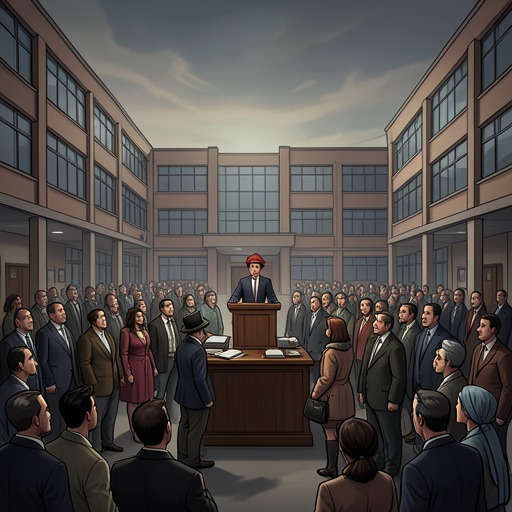
At Columbia, [William Henry Devereaux, Sr.](entity:character-recall-character-william-henry-dever-0cd5117c9d45) finds himself unable to speak or read in front of students, though his thoughts return when he leaves the classroom. He eventually discovers he can teach by beginning a lecture in the hallway and continuing after entering, winning a standing ovation with his performance on Dickens.
When William Henry Devereaux, Jr. is twenty-nine
The Novel That Changed Their Course
Hank publishes [Off the Road](entity:object-recall-object-off-the-road-199d55a49c01), his only novel for decades. Its advance helps him and [Lily](entity:character-recall-character-lily-96089ba009e2) buy land and settle in [Railton](entity:location-recall-location-railton-a565322b7fce), while the book’s modest success fixes them in a place they had never expected to call home.
Nearly twenty years before the main story
The Move to Allegheny Wells
Hank and [Lily](entity:character-recall-character-lily-96089ba009e2) build a house in [Allegheny Wells](entity:location-recall-location-allegheny-wells-d3bd2cf5de9e), hoping to escape the town and the university community. When colleagues begin buying nearby lots, they purchase two adjacent parcels to keep neighbors at a distance, inadvertently helping to set the [English Department Wars](entity:state-recall-state-english-department-wars-bc0c1f88edf6) in motion.
Soon after Hank buys the adjacent lots
The Refused Sale
[Paul Rourke](entity:character-recall-character-paul-rourke-716b31b5ff2d) offers to buy Hank’s parcels, arguing that the sale would effectively make Hank’s own land free. Hank refuses and needles Rourke, who comes to regard him as responsible for the misfortunes of the development across the road.
Over the decades before the main story
The Department’s Old Feuds
The [Railton](entity:location-recall-location-railton-a565322b7fce) faculty’s careers harden into rivalries, grudges, and stalled ambitions. [Teddy Barnes](entity:character-recall-character-teddy-barnes-a982b68a4ae6) is eventually forced out as department chair, while [Phineas Coomb](entity:character-recall-character-phineas-coomb-955265c92d7c)’s spectacular episode after stopping his medication ends in hospitalization and a return to his former life.
The autumn before the main story
Julie’s Unaffordable House
[Julie Devereaux](entity:character-recall-character-julie-devereaux-2580b0eaa25b) and [Russell](entity:character-recall-character-russell-1c8a85e72bbe) build a large house modeled on Hank and [Lily](entity:character-recall-character-lily-96089ba009e2)’s, despite Hank’s doubts that they can afford it. Russell loses the job he expected to rely on, and the unfinished house becomes a visible sign of their mounting financial distress.
About a year before the main story
Hank and Lily Adopt Occam
A young white German shepherd appears in Hank and [Lily](entity:character-recall-character-lily-96089ba009e2)’s driveway, dragging fishing line with a hook caught in his lip. They free him and search for an owner, but when none appears, [Occam](entity:character-recall-character-occam-7a78e0a39542) becomes part of their household.
About two weeks before the main story
William Cherry’s Suicide
William Cherry, a recently retired [Conrail](entity:organization-recall-organization-conrail-e69da546188a) employee, lies down on the railroad tracks and is killed. His neighbors cannot understand why he would take his life after securing his pension, and his death unsettles Hank, who wonders what hidden despair can make a person act.
April, during Hank’s year as interim chair
The Budget Rumors
Rumors spread that [West Central Pennsylvania University](entity:location-recall-location-west-central-pennsyl-33633fef6349) may purge tenured faculty to meet severe budget cuts. Hank dismisses the warnings as the familiar [April](entity:time-recall-time-april-2c2e37855810) cycle of academic panic, even as colleagues suspect he may have been asked to prepare a layoff list.
April, before the personnel committee meeting
The Search in Limbo
The [English Department](entity:organization-recall-organization-english-departme-af2a00a8b9ef)’s search for a new chair has dwindled from hundreds of applicants to three, while funding for the position remains uncertain. Its members distrust strong candidates and each other, turning the search into another arena for their long-running departmental conflict.
The day before Hank is driven home by Teddy
The Committee Room Collision
During a personnel meeting, Hank needles [Gracie DuBois](entity:character-recall-character-gracie-dubois-fc9aef059fb9) about the department’s poetry appointments and her effort to exclude a candidate. She hurls her spiral notebook; its metal coil punctures Hank’s nostril, leaving him bleeding and the committee stunned.
The afternoon after the committee meeting
The Ride Through Railton
[Teddy Barnes](entity:character-recall-character-teddy-barnes-a982b68a4ae6) drives Hank home in his ancient Honda, discussing rumors of layoffs and worrying that Hank’s refusal to take them seriously will cost him allies. Their conversation circles [Teddy](entity:character-recall-character-teddy-5cce5c5cdfa6)’s unspoken devotion to [Lily](entity:character-recall-character-lily-96089ba009e2) and Hank’s habit of treating serious matters as jokes.
On the drive home from campus
The Roadside Encounter
[Paul Rourke](entity:character-recall-character-paul-rourke-716b31b5ff2d)’s second wife forces [Teddy](entity:character-recall-character-teddy-5cce5c5cdfa6)’s car to brake, and Rourke gets out to photograph Hank’s injured nose. He says he will remember Hank after he is gone, contemptuously dismissing Teddy, whose anger arrives only after Rourke has driven away.
That evening at Hank and Lily’s house
Occam’s Welcome for Teddy
[Teddy](entity:character-recall-character-teddy-5cce5c5cdfa6) visits Hank and is greeted by [Occam](entity:character-recall-character-occam-7a78e0a39542), who greets him by thrusting his snout into Teddy’s crotch. [Lily](entity:character-recall-character-lily-96089ba009e2) scolds the dog, while Hank sees the incident as a comic expression of his own affinity with Occam’s unruly instincts.
That evening
Lily’s Philadelphia Interview
Hank learns that [Lily](entity:character-recall-character-lily-96089ba009e2) plans to travel to [Philadelphia](entity:location-recall-location-philadelphia-375889b6054c) for a job interview and to see her father. He does not tell her about his worsening difficulty urinating, and her concern that he may end up in hospital or jail goes unheeded.
During Hank’s run to Julie’s house that evening
Julie’s Accusation
Hank finds [Julie](entity:character-recall-character-julie-5a82eb7a07d7) and [Russell](entity:character-recall-character-russell-1c8a85e72bbe)’s unfinished house and sees how precarious their finances have become. When Julie drives him home, she suddenly accuses him and [Lily](entity:character-recall-character-lily-96089ba009e2) of preparing to divorce and punches his arm, revealing how deeply she fears losing the stability of her parents’ marriage.
That night
The Marriage at a Distance
Hank tells [Lily](entity:character-recall-character-lily-96089ba009e2) that [Julie](entity:character-recall-character-julie-5a82eb7a07d7) has mistaken her [Philadelphia](entity:location-recall-location-philadelphia-375889b6054c) trip for a sign of marital collapse. Lily says Julie is upset and asks Hank whether he is unhappy, but he turns away from the intimacy she offers rather than answer directly.
Late that night
Billy’s Drunken Call
[Billy Quigley](entity:character-recall-character-billy-quigley-1cf07a0cddb3) calls Hank to accuse him of betrayal and demand more paid teaching work for himself and his daughter Meg. The call softens into tears and a rueful exchange, exposing Billy’s financial desperation and dependence on Hank’s patience.
The following day
The Visit to Hank’s Mother
Hank visits his mother before she leaves for New York with [Charles Purty](entity:character-recall-character-charles-purty-b0e334c681bf). She criticizes his satirical account of Red’s death, arguing that he has made his father seem foolish, and warns that Hank is unprepared for [William Henry Devereaux, Sr.](entity:character-recall-character-william-henry-dever-0cd5117c9d45)’s return.
During the visit to his mother
The Cellar Disorientation
In the dark cellar, Hank finds the childhood dog collar and a suitcase among his mother’s memorabilia. A sudden wave of disorientation nearly sends him tumbling on the stairs, leaving him troubled by the sense that something buried in the past is returning.
That afternoon
The Workshop Breakdown
Hank’s writing workshop turns ugly when [Solange](entity:character-recall-character-solange-3e628663b0e7) attacks [Leo](entity:character-recall-character-leo-b697c7b2a8d5)’s violent, sexually explicit story. Instead of stopping the personal assault, Hank withdraws into distraction, then eventually points out that Leo’s story has no fully realized characters or causal plot.
Later that day
Gracie’s Grievance
[Gracie](entity:character-recall-character-gracie-d608f43e4ecb) visits Hank to apologize for injuring him, but she also announces that she will file a grievance to protect her place in the department. She tells him that [Finny](entity:character-recall-character-finny-7bb4199299e2) is organizing a recall effort, while admitting that she has always found Hank more like a character in a book than a professor.
The afternoon after Gracie’s visit
The Urinary Vigil
Hank stands for a long time in the men’s room, unable to urinate, and begins to fear that he has inherited his father’s kidney-stone troubles. At racquetball, [Tony Coniglia](entity:character-recall-character-tony-coniglia-654e028cb35c) talks about sex and then warns Hank that the university may cut faculty positions, deepening Hank’s sense that change is approaching.
Late afternoon that day
The Goose-and-Budget Ultimatum
At the campus duck pond, Hank is caught on camera struggling with [Finny the Goose](entity:character-recall-character-finny-66c60f89a402), who has seized his fake nose and glasses. In a sudden burst of anger and conviction, Hank identifies himself as department chair and threatens to kill a duck each day unless he receives funding for composition sections.
That night
The Celebration at The Tracks
Hank’s television appearance turns him into a local celebrity, and he celebrates at [The Tracks](entity:location-recall-location-the-tracks-c6dcdf593f6a) with Tony, reporter [Missy Blaylock](entity:character-recall-character-missy-blaylock-d3ef3da2a7fc), and others. He drinks heavily, calls [Lily](entity:character-recall-character-lily-96089ba009e2) and several women, and imagines that Lily may be having an affair with [Jacob Rose](entity:character-recall-character-jacob-rose-7532773dfbfa).
After midnight
The Hot-Tub Party
At Tony’s house, Missy gets into the hot tub naked, while Hank remains a drunken, uneasy observer. Tony’s phone rings repeatedly; after Hank leaves, a distressed young woman appears, whom Hank later realizes is [Yolanda Ackles](entity:character-recall-character-yolanda-ackles-82888360a19a).
On Hank’s walk back from Tony’s house
The Stranger in the Woods
Hank meets a large, disoriented young woman walking uphill in flip-flops. She asks his name, then says he is not the man she is seeking; her strange certainty leaves him unsettled.
The following morning
The Morning After
Hank wakes after a night of drinking and sees his goose threat replayed on national television. His wife’s recorded message sounds flat, and his attempt to reach her by calling a hotel and asking for Jacob under an assumed name leads only to confusion.
That morning
Hank Visits Lily’s Class
Hank visits [Lily](entity:character-recall-character-lily-96089ba009e2)’s class at [Railton High School](entity:organization-recall-organization-railton-high-sch-ed56acd7d007), where her low-track students pepper him with questions about his book and his televised threat. He learns from a colleague that people at the school want Lily to stay, despite her possible move to [Philadelphia](entity:location-recall-location-philadelphia-375889b6054c).
Later that day
The Confrontation with Dickie
[Dickie Pope](entity:character-recall-character-dickie-pope-33b92493212f) meets Hank and reveals that the university has a systemwide mandate to plan a twenty-percent reduction in staff and costs. He invites Hank to provide criteria that would guide the cuts, presenting cooperation as a way to protect friends and shape the department’s future.
That afternoon
The Union’s Appeal
[Herbert Schonberg](entity:character-recall-character-herbert-schonberg-686a2e0ba014) and [Paul Rourke](entity:character-recall-character-paul-rourke-716b31b5ff2d) confront Hank at home and ask him to side with the faculty union against the administration. Hank refuses to declare himself for either faction, insisting on his independence even as Herbert warns that neutrality may leave him friendless.
That afternoon
Julie’s Injured Eye
Hank returns to [Julie](entity:character-recall-character-julie-5a82eb7a07d7)’s house and finds her eye badly bruised. Julie says [Russell](entity:character-recall-character-russell-1c8a85e72bbe) shoved her and that she wants him out; Hank takes her to stay with him and [Lily](entity:character-recall-character-lily-96089ba009e2) rather than press her for a fuller account.
That afternoon at the English department
The List of Recall Rules
[Rachel](entity:character-recall-character-rachel-84f0cd683952) tells Hank that the department’s rules require a three-fourths majority to recall the chair, not the two-thirds that [Finny](entity:character-recall-character-finny-7bb4199299e2) believes. She quietly prepares copies of the operating paper, giving Hank a procedural fact that may change the outcome of the coming vote.
That afternoon
Rachel’s Stories Find an Agent
Hank learns that Wendy, his agent, has offered to represent [Rachel](entity:character-recall-character-rachel-84f0cd683952)’s fiction. Rachel is frightened by the prospect, but Hank urges her to trust her work; soon Wendy sells the stories, giving Rachel a professional opening Hank has long lacked for himself.
That evening
The Attempted Recall
As the department gathers to remove Hank, he hides above the conference room in the ceiling crawlspace, listening to colleagues debate the stalled chair search and his alleged dealings with the administration. He lets a folded copy of the recall rules fall to [Billy Quigley](entity:character-recall-character-billy-quigley-1cf07a0cddb3), who reads it as the votes are counted.
At the end of the department meeting
Hank Is Recalled
The vote comes out eighteen to nine in favor of recalling Hank as chair. His colleagues leave without knowing where he is, while Hank remains trapped in the ceiling space, physically filthy and increasingly aware that his conduct has gone beyond harmless mischief.
That night after the recall vote
Russell’s Account
[Russell](entity:character-recall-character-russell-1c8a85e72bbe) finds Hank in the campus parking lot, and later tells him what happened with [Julie](entity:character-recall-character-julie-5a82eb7a07d7): a fight over an expensive chair led Russell to grab her shoulders, after which she fell into a stereo cabinet. He admits that he wanted to punish her and failed to stop himself, while Hank urges him to face the consequences rather than disappear.
Later that night
Tony’s Confession
Tony visits Hank and explains that [Yolanda Ackles](entity:character-recall-character-yolanda-ackles-82888360a19a) believes he is God and claims they have had a sexual relationship. He fears that he may have flirted with her and contributed to her delusions, while the university’s sexual-harassment committee begins investigating.
That night
The Restaurant Outburst
Hank and Tony go to dinner, where they encounter [Teddy](entity:character-recall-character-teddy-5cce5c5cdfa6) and June, [Paul Rourke](entity:character-recall-character-paul-rourke-716b31b5ff2d), and [Bodie Pie](entity:character-recall-character-bodie-pie-6f388cbb2ac8). Tony suddenly turns on Teddy and demands that he tell June he never touched Yolanda, then regains his usual comic manner, leaving the restaurant’s tensions unresolved.
Late that snowy night
The Arrest at the Rail Yard
After dinner, Hank stops near the rail yard and drinks while contemplating death, love, and his uncertain future. A police officer arrests him for drunk driving; at the station he discovers that Tony has also been arrested and is sleeping in the same cell.
The next morning
The Second Goose Incident
Hank learns that another goose has been killed and hung on campus, and the news crews return to [Railton](entity:location-recall-location-railton-a565322b7fce). He visits [Paul Rourke](entity:character-recall-character-paul-rourke-716b31b5ff2d), who says a layoff list exists for every department, though Hank insists he never wrote one.
That morning
Julie’s Second Thoughts
[Julie](entity:character-recall-character-julie-5a82eb7a07d7) returns to Hank’s house and says [Russell](entity:character-recall-character-russell-1c8a85e72bbe) has collected some belongings; the locks at their home are being changed. She also leaves a message admitting that the altercation was not entirely his fault, though Hank cannot bring himself to pick up the phone and speak to her directly.
That morning
The Arrival of William Henry Devereaux, Sr.
Hank meets [Charles Purty](entity:character-recall-character-charles-purty-b0e334c681bf) at [The Circle](entity:location-recall-location-the-circle-d5800b23f653) and learns that his mother and father have returned to [Railton](entity:location-recall-location-railton-a565322b7fce) together. Purty describes [William Henry Devereaux, Sr.](entity:character-recall-character-william-henry-dever-0cd5117c9d45) as emotionally fragile, prone to sudden crying, and unable to help with the move of his books.
That day
The Books Fill the Garage
Purty delivers the many boxes of [William Henry Devereaux, Sr.](entity:character-recall-character-william-henry-dever-0cd5117c9d45)’s books to Hank’s garage, blocking the passage into the house. Hank resents that his mother has assumed he will store them, but the books also make his father’s return impossible to ignore.
That day
Hank’s Medical Examination
[Phil Watson](entity:character-recall-character-phil-watson-89e1144b1992) examines Hank’s worsening urinary retention and finds no stone on the X-ray, though a prostate irregularity concerns him. Hank feels an inexplicable excitement at the possibility of a serious diagnosis, then reports the gaps in time that have begun to trouble him.
The following day
The Visit to Paul Rourke
Hank visits [Paul Rourke](entity:character-recall-character-paul-rourke-716b31b5ff2d) and tells him plainly that he did not give [Dickie Pope](entity:character-recall-character-dickie-pope-33b92493212f) a layoff list. Rourke believes him, and the two enemies share an unexpectedly candid conversation about illness, driving, and the prospect of playing basketball again.
That day
The First Reunion with His Father
Hank visits [William Henry Devereaux, Sr.](entity:character-recall-character-william-henry-dever-0cd5117c9d45), now living with Hank’s mother, and walks with him to the abandoned amusement park. His father tells the story of his classroom collapse at Columbia, then breaks down in tears while admitting that he may have wronged Dickens.
The next day
Leo Is Taken Away
During a workshop on [Solange](entity:character-recall-character-solange-3e628663b0e7)’s story, campus police arrive to take [Leo](entity:character-recall-character-leo-b697c7b2a8d5) away, though Hank refuses to let them interrupt class without objection. Leo leaves quietly, and Solange wonders aloud what his arrest means after she had challenged his manhood and his writing.
That afternoon
The Administration’s Four Names
[Jacob Rose](entity:character-recall-character-jacob-rose-7532773dfbfa) reveals that Dickie’s staff-cutting plan has produced four names from the [English Department](entity:organization-recall-organization-english-departme-af2a00a8b9ef): [Orshee](entity:character-recall-character-orshee-1a74959390b1), [Finny](entity:character-recall-character-finny-7bb4199299e2), [Billy Quigley](entity:character-recall-character-billy-quigley-1cf07a0cddb3), and Hank. Jacob explains the different arrangements he has secured for the others, while Hank realizes that the list was part of a bargain that helped Jacob rise into university leadership.
At the meeting with Jacob
Hank Refuses the Deanship
Jacob offers Hank the dean’s position, but Hank refuses, unwilling to benefit from the same process that removes colleagues and promotes his friend. Their argument becomes personal when Jacob asks what Hank truly wants; Hank answers that he wants to urinate and rushes to the men’s room.
Immediately after the meeting
Hank’s Collapse and Hospitalization
After finally urinating, Hank laughs uncontrollably and then collapses. He awakens in hospital with [Lily](entity:character-recall-character-lily-96089ba009e2) beside him, learns that he struck his head, and sees [Angelo](entity:character-recall-character-angelo-c31ee406c5ac) waiting in the corridor as the family prepares to bring him home.
Before Hank’s hospitalization
Angelo’s Armed Standoff
[Angelo](entity:character-recall-character-angelo-c31ee406c5ac) recounts how he confronted three young men who had come to collect money owed for a newspaper delivery, believing them to be dangerous strangers. He raises his shotgun, counts to three, and then fires into the porch roof rather than shoot the young man who refuses to retreat; the porch collapses, injuring them both.
The summer after the standoff
Angelo’s Conviction
[Angelo](entity:character-recall-character-angelo-c31ee406c5ac) is tried and convicted for the armed incident, though he later hopes for a suspended sentence if he sells his house and leaves the neighborhood. [Lily](entity:character-recall-character-lily-96089ba009e2) brings him to stay with the family, where his presence tests her love for him and Hank’s uneasy tolerance of his bigotry.
After Russell goes to Atlanta
Julie and Russell Reunite
Hank sends [Russell](entity:character-recall-character-russell-1c8a85e72bbe) to [Atlanta](entity:location-recall-location-atlanta-bb210fd7f448) to pursue a job, believing distance may give him and [Julie](entity:character-recall-character-julie-5a82eb7a07d7) room to recover. Julie later joins him there, finds work, and the couple begins to rebuild their life after their separation.
Near the end of the academic term
The Faculty Rejects a Strike
As layoffs and budget cuts threaten the university, the faculty union calls for a strike vote intended to disrupt graduation. Once [Dickie Pope](entity:character-recall-character-dickie-pope-33b92493212f) is removed and Jacob takes over, the faculty vote overwhelmingly against striking, weakening the union’s leverage during the crisis.
Near the end of the spring term
Jacob Takes Over
Jacob replaces [Dickie Pope](entity:character-recall-character-dickie-pope-33b92493212f) as chief executive officer after the university’s leaders reorganize. He becomes a more powerful figure than Hank has ever been, while his impending marriage to [Gracie DuBois](entity:character-recall-character-gracie-dubois-fc9aef059fb9) links his private life to the departmental feuds that have shaped their careers.
Near the end of the spring term
The True Goose Slayer
[Angelo](entity:character-recall-character-angelo-c31ee406c5ac)’s long account clarifies why he was arrested, but it does not explain who killed the campus goose; the mystery remains separate from his armed confrontation. The public story eventually shifts away from Hank as the alleged culprit, while the university’s cuts and the department’s internal conflicts continue to shape his future.
After the spring crisis
Hank Leaves the University
Hank submits his resignation, but the letter is misplaced and he instead receives a half-year sabbatical, leaving his formal departure incomplete. He remains connected to the university and agrees to teach, even as he turns down the deanship and begins to reconsider his life beyond academic politics.
Early summer
Occam’s Death
[Occam](entity:character-recall-character-occam-7a78e0a39542) slips out of Hank’s house and is struck by [Finny](entity:character-recall-character-finny-7bb4199299e2)’s car. Finny brings the dog’s body back wrapped in a sheet, devastated and certain that Hank will blame him, while Hank recognizes that the accident grew out of the same unpredictable chain of ordinary events that governs the rest of their lives.
Immediately after Occam’s death
Hank Buries Occam
Hank digs [Occam](entity:character-recall-character-occam-7a78e0a39542)’s grave at the edge of the woods, ruining his clothes and blistering his hands as his father once did while burying Red. The echo between the two burials gives Hank a new understanding of his father’s vulnerability and of the shared history he had tried to deny.
Later that summer
The Reunion at Tony’s House
After [Yolanda Ackles](entity:character-recall-character-yolanda-ackles-82888360a19a) attempts suicide and Tony is hospitalized with heart fibrillations, Jacob gathers friends at Tony’s house. The men crowd around [Russell](entity:character-recall-character-russell-1c8a85e72bbe) as he tries to repair Tony’s computer, and their comic entrapment in the tiny room gives Hank an unexpected sense of belonging among them.
Mid-July
The Death of William Henry Devereaux, Sr.
[William Henry Devereaux, Sr.](entity:character-recall-character-william-henry-dever-0cd5117c9d45) dies quietly in his reading chair while reading Our Mutual Friend. Hank recognizes that their last meaningful exchange came when his father confessed his guilt about Dickens, a rare moment of unguarded feeling between them.
By the third week of August
The Summer’s Changes
[Julie](entity:character-recall-character-julie-5a82eb7a07d7) and [Russell](entity:character-recall-character-russell-1c8a85e72bbe) are together in [Atlanta](entity:location-recall-location-atlanta-bb210fd7f448), Jacob and [Gracie](entity:character-recall-character-gracie-d608f43e4ecb) are building a house, and [Paul Rourke](entity:character-recall-character-paul-rourke-716b31b5ff2d) has become dean after separating from his second wife. Hank and [Lily](entity:character-recall-character-lily-96089ba009e2) jog together and host friends, while Hank accepts that his life still contains affection, work, and opportunities he had not expected.
During the summer
Hank Loses in Tennis
[Julie](entity:character-recall-character-julie-5a82eb7a07d7) finally defeats Hank decisively at tennis, no longer distracted by his gamesmanship. The match marks a tender but undeniable shift: his daughter is no longer the child he could outmaneuver, and he must accept the diminishing power that comes with age.
Late summer
The Season of Grace
[Tony Coniglia](entity:character-recall-character-tony-coniglia-654e028cb35c) tells Hank that older men must recognize when their best days of action have passed and enter the “[Season of Grace](entity:expression-recall-expression-season-of-grace-2b9555f83d7a).” Hank resists the analogy but begins to accept that a life can retain meaning without the victories and ambitions he once expected.
By the end of summer
Hank’s Renewed Work
Wendy sells Hank’s collected newspaper satires as The [Goose](entity:creature-recall-creature-3eed9ec92b5f) Slayer, and a personal essay about his father is praised as his strongest work. Hank also returns to teaching and becomes involved in a program supporting disadvantaged high-school students, finding a possible purpose beyond departmental combat.
Later that summer
The Closing Gathering
At a gathering at Tony’s house, a roomful of male colleagues and friends crowds around a malfunctioning computer and laughs at its endless, meaningless stream of symbols. Hank recognizes that their confusion and their need for one another matter more than solving the machine’s code.